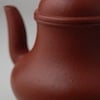
bats are lucky - here is a bat pot I have, obviously cast, don't use it too much as it is bigger than I need.

Everything I've heard, as well as my own limited experience, seems to indicate that it takes an extremely long time for a pot to absorb flavor to the point where it's likely to interfere with a different type of tea. And even then, I think most people would agree that a good cleaning should reset the pot sufficiently to use it for a new type of tea.beachape wrote: I'm not sure how I would feel about using a "used" yixing teapot. Looks like shoe polish to me, but could be wrong. Even if it is a legitimate pot, it would add strange flavors to your tea (because of the absorbent nature of yixing clay). If you know what kind of tea was used in it, then great. Otherwise, might want to start with a fresh one. Even if you clean the pot, boil the pot etc... might still taste funny.
It's been said that the only way to get to know this field is to handle many pots. If you don't live in Asia, and, if you are not in close proximity to a reputable and knowledgeable tea seller, it will be even harder to understand all of this. It would seem the only alternative is to find a seller with whom you feel comfortable and go from there. Once you have a high quality pot in your hands, you can begin to understand a little about the clay and how it affects the tea. The problem then becomes identifying the inferior from the superior. This is not an easy topic and I don't consider myself an expert. I can usually recognize inferior clay but the good copies using mixed clay with oxides pose the biggest hurdle.beachape wrote:Tead Off- That certainly makes sense.
How do you feel about new pots made of old clay? I've seen many pots advertised with 90's clay. Or what about antique pots that have not been used? I realize that these pots are likely not as "antique" as a pot that has been used for generations, but perhaps the clay quality is good.
The whole yixing market is confusing for me. New pots could be made with inferior clay, or even contaminated clay, while "antique" pots could easily be replicas. However, I don't think I'd ever buy a used yixing. Thanks for the info though.

I would just boil it with tea leaves I wanna drink after taking care with toothbrushbeachape wrote:I'm not sure how I would feel about using a "used" yixing teapot. Looks like shoe polish to me, but could be wrong. Even if it is a legitimate pot, it would add strange flavors to your tea (because of the absorbent nature of yixing clay). If you know what kind of tea was used in it, then great. Otherwise, might want to start with a fresh one. Even if you clean the pot, boil the pot etc... might still taste funny
It's true lots of potters still own clay or ore that was mined decades ago. The Chinese call it Chen Fu (strong), clay that undergone proper Chen Fu period usually turns glossier than new clay, if it's Zhuni that undergone Chen Fu, it raises the percentage of success in a kiln (1 out 2 bursts in a kiln), grows patina quicker.beachape wrote:How do you feel about new pots made of old clay? I've seen many pots advertised with 90's clay. Or what about antique pots that have not been used? I realize that these pots are likely not as "antique" as a pot that has been used for generations, but perhaps the clay quality is good.