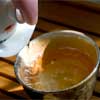
I was always under the impression that guinomi were all sake cups but tea drinkers use them as well. In the case of Hagi, I wouldn't interchangeably use a guinomi for sake and tea as the buildup of alcohol would affect the tea's taste.rdl wrote:"heliospace "is there a difference between hagi sake and tea cups?"
Price... no kidding, the pricing for a highly prized sake cup is well up there. Not to say any well-made hagiyaki is inexpensive. The shapes of the two differ and often size, but a sake cup is not always smaller than a small tea cup. The glaze and clay is as variable as cups and tea bowls.
My guess is also that the success rate of a "perfect" sake cup from the kiln is few and that too determines the price, but a potter can tell me if I am correct or not.
If I am understanding you, I can add that I've looked at some cups and was not sure if it was a guinomi or yunomi, and maybe being a foreigner the easiest answer for the shop owner was to say both, but I think the answer that it could be used for both was more than just that. I have also seen very expensive guinomi that were separate from the tea ware items, so I assume were bought just for that purpose.Tead Off wrote:I was always under the impression that guinomi were all sake cups but tea drinkers use them as well. In the case of Hagi, I wouldn't interchangeably use a guinomi for sake and tea as the buildup of alcohol would affect the tea's taste.rdl wrote:"heliospace "is there a difference between hagi sake and tea cups?"
Price... no kidding, the pricing for a highly prized sake cup is well up there. Not to say any well-made hagiyaki is inexpensive. The shapes of the two differ and often size, but a sake cup is not always smaller than a small tea cup. The glaze and clay is as variable as cups and tea bowls.
My guess is also that the success rate of a "perfect" sake cup from the kiln is few and that too determines the price, but a potter can tell me if I am correct or not.
In a Japanese restaurant, I've never been served a guinomi with tea, always a yunomi. And, with sake, always a guinomi.


debunix,debunix wrote:They're lovely and they hold tea, so I call them teacups. My favorite size for teacups is a little wider than tall, to better disperse heat for quick drinking infusions, and holding 5-8 ounces, so able to hold a full infusion from most of my teapots. It's a tricky size to find in Hagi ware, because it's bigger than the standard Sake cup, and smaller than a chawan--and most that hold about that number of ounces are tall/narrow which doesn't work so well for teas infused with very hot water.
It turns out that the cups I like best are the kumidashi-wan, apparently used for water but not for the tea itself during the tea ceremony. They often come in sets of 5--perhaps that is what yours are. Still, I call them teacups, and am happy when I find something I like in that size/style.

I love how everyone can count on you to be heredebunix wrote:Drippy earthy ripply watery.....super!
[looking with suddenly critical eye at plastic water pitcher....]
and thank you.
 Can't get enough of Seigan Yamane's work.