The 88 qing bing isn't anywhere near that cheap (especially from them) now. If you're talking about the one listed on their site at around $341, it's for 100g, and I think it's an old price anyway. I think the official price for a full cake if you buy it from them is between $1200 and $1500, or maybe more now. If you're curious, you can try the Richmond branch, who have it in stock.Cinnabar Red wrote:TomVerlain wrote: Great advice!!! I'll take out a loan, if I can find one, and order the the "88 Cake" from The Best Tea House in Hong Kong" At current exchange rates Its a bargain at 341.72 U.S.


While I did not start with the "absolute" best, my first taste of pu'erh was at ten ren in Taipei. I did try their best. It was like $300 a kilo so I bought their second best which was like $120 a kilo. In retrospect, I should have splurged and got some of the best. The second best is nice, but nowhere near the first taste of primo.
At that time I though it was silly to spend that much. Of course, since then, I have found that was not really overpriced. I think it was supposed to be 30 year old. Since I do not speak chinese, and the nice lady who made my tea spoke almost no english, it was amusing.
I remember her trying to tell me with hand motions about the "throat" taste.
Ten ren in usa is not comparable.
I really don't think there is a reason not to try and taste high quality tea if you have the disposable income, opportunity and desire. It does give a benchmark and helps standardize frames of reference. I would love to try the 88 cake so i could gauge my feelings about it against a masters take on it. I am not going to spend that kind of money on it at this point as cloud points out it is now overpriced. Having a knowledgeable and well stocked pu'erh shop around the corner is not something most folks on this list have the luxury of having, so we order from the internet, trade notes and hope.
If you are on a budget, my previous recommendation of a current name brand shu and a few 3 or 4 year old sheng samples is affordable and gives a reasonable picture of what most people drink on a day to day basis (in my guestimated opinion)
I am sure everyone has a different story on how they started on their tea journey. Probably alot of them start with "...I could not believe how disgusting that tea was. I brewed it for 6 minutes like the box said......"
A certain percentage persist and end up here against all odds.
So no matter what you try or buy, being willing to experiment and try to coax the best out of what ever "Qing Ming Ting Hao Tuo Beeng Cha" you end up with is the key.
At that time I though it was silly to spend that much. Of course, since then, I have found that was not really overpriced. I think it was supposed to be 30 year old. Since I do not speak chinese, and the nice lady who made my tea spoke almost no english, it was amusing.
I remember her trying to tell me with hand motions about the "throat" taste.
Ten ren in usa is not comparable.
I really don't think there is a reason not to try and taste high quality tea if you have the disposable income, opportunity and desire. It does give a benchmark and helps standardize frames of reference. I would love to try the 88 cake so i could gauge my feelings about it against a masters take on it. I am not going to spend that kind of money on it at this point as cloud points out it is now overpriced. Having a knowledgeable and well stocked pu'erh shop around the corner is not something most folks on this list have the luxury of having, so we order from the internet, trade notes and hope.
If you are on a budget, my previous recommendation of a current name brand shu and a few 3 or 4 year old sheng samples is affordable and gives a reasonable picture of what most people drink on a day to day basis (in my guestimated opinion)
I am sure everyone has a different story on how they started on their tea journey. Probably alot of them start with "...I could not believe how disgusting that tea was. I brewed it for 6 minutes like the box said......"
A certain percentage persist and end up here against all odds.
So no matter what you try or buy, being willing to experiment and try to coax the best out of what ever "Qing Ming Ting Hao Tuo Beeng Cha" you end up with is the key.

I have also faced this dilemma. I have the disposable income to spend on expensive tea, but I have noticed that when you have tried not so good tea first you REALLY appreciate better vintages.
What I did was take like $100 and order as many samples from puerh shop that I could. Then over the course of a month or two , I would try them all day every day.
Then I noted what region and factory the ones that interested me. Then I started looking for the high priced relatives of these cakes.
I also had someone show me how to taste the tea. I partly agree with some of what was said. On your own you will not be able to understand the nuances of a very very rare / old tea. But I also see nothing wrong with buying some mid level , nice teas to experiment with.
I basically do alot of samples, so that I can still pay my rent
J
What I did was take like $100 and order as many samples from puerh shop that I could. Then over the course of a month or two , I would try them all day every day.
Then I noted what region and factory the ones that interested me. Then I started looking for the high priced relatives of these cakes.
I also had someone show me how to taste the tea. I partly agree with some of what was said. On your own you will not be able to understand the nuances of a very very rare / old tea. But I also see nothing wrong with buying some mid level , nice teas to experiment with.
I basically do alot of samples, so that I can still pay my rent
J
Oct 23rd, '08, 13:07
Posts: 1936
Joined: May 22nd, '06, 11:28
Location: Trapped inside a bamboo tong!
Contact:
hop_goblin
Re: tasting for the inexperienced
Dangit Sal, when was I de-throned!Salsero wrote:The first statement is fabrication (Heavy poking me in my short ribs). I won't deny being the loudest, however, and there is a certain nobility to that! The second statement is, of course, always true. But I have no idea how I would introduce someone to pu. I've always been a little afraid to encourage new people, it's such a problematic part of the tea world.heavydoom wrote: he is the reigning king of pu and i am sure he won't mind having another tea drinker joining him on the weekend

Don't always believe what you think!
http://www.ancientteahorseroad.blogspot.com
http://englishtea.us/
http://www.ancientteahorseroad.blogspot.com
http://englishtea.us/
Lots of good info in this thread and lots of different questions about tasting.
I think a very important part of tasting is to have good brewing ratio and brewing vessels. Yixing pots or gaiwan and a fine mesh strainer. Learn about using the yixing pot for brewing puerh.
Use about 1 gram per 50ml of water. For example, my yixing pot is about 7 ounces, which is roughly 200ml so I use about 4 grams of tea in the pot. I have a small, very inexpensive digital scale so I know my ratio is consistent and correct. Hard to taste and compare if you brew different ratios of tea to water each time.
Slurp and get some air into your mouth when tasting, this opens up the bouquet and lets your nose get involved which is where most of our tasting really happens. If you don't already know something about wine tasting I'd recommend learning about that because it applies to tasting just about anything.
I think a very important part of tasting is to have good brewing ratio and brewing vessels. Yixing pots or gaiwan and a fine mesh strainer. Learn about using the yixing pot for brewing puerh.
Use about 1 gram per 50ml of water. For example, my yixing pot is about 7 ounces, which is roughly 200ml so I use about 4 grams of tea in the pot. I have a small, very inexpensive digital scale so I know my ratio is consistent and correct. Hard to taste and compare if you brew different ratios of tea to water each time.
Slurp and get some air into your mouth when tasting, this opens up the bouquet and lets your nose get involved which is where most of our tasting really happens. If you don't already know something about wine tasting I'd recommend learning about that because it applies to tasting just about anything.

Oct 27th, '08, 15:22
Posts: 1633
Joined: Feb 15th, '08, 10:15
Location: Pennsylvania
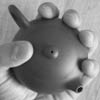
Vince; I just noticed that your avatar looks very much like the pot I have from YSLLC. Heres a pic of mine, is it the same? Also as your leave ratio is a generally good ratio I actually use 5-6 grams for my 125 ml. yixing and get very good results. Not saying this way is right but just another way for beginners to try.VinceBLG wrote:Lots of good info in this thread and lots of different questions about tasting.
I think a very important part of tasting is to have good brewing ratio and brewing vessels. Yixing pots or gaiwan and a fine mesh strainer. Learn about using the yixing pot for brewing puerh.
Use about 1 gram per 50ml of water. For example, my yixing pot is about 7 ounces, which is roughly 200ml so I use about 4 grams of tea in the pot. I have a small, very inexpensive digital scale so I know my ratio is consistent and correct. Hard to taste and compare if you brew different ratios of tea to water each time.
Slurp and get some air into your mouth when tasting, this opens up the bouquet and lets your nose get involved which is where most of our tasting really happens. If you don't already know something about wine tasting I'd recommend learning about that because it applies to tasting just about anything.
