Aug 2nd, '09, 06:35
Posts: 82
Joined: Feb 17th, '09, 08:00
Location: Europe
by reincarnate » Aug 2nd, '09, 06:35
Hey everyone!
My Japanese is very poor >.< Can anyone help me with what is says on those two teas? I'm mainly wondering if there is any brand name, tea type any specific info about the teas. If anyone knows Japanese and can translate I would be very thankful!


Aug 2nd, '09, 07:50
Posts: 2794
Joined: Oct 16th, '08, 21:01
Location: Arlington, VA
Been thanked: 2 times
by Drax » Aug 2nd, '09, 07:50
I'm not an expert, so take this at face value...
First, the reddish-picture is upside down. Once flipped, the three big characters on the left (杜の恵) "mori no megumi" say something like "Blessing of the Forest" and appear to be the name of the tea. The characters on the right... not so sure. Meiji (明治) and kamitaka? shinkou? (神高). Meiji was an emporer (and an era of Japan), kami is god/divine, and taka means high or precious. There's also smaller characters there, some of them say 'tea' but i can't read the other ones well enough.
The purple picture basically is the instructions on how to brew the tea.
The bottom picture appears to mostly say what the english says (that it's organic tea). The big gold sticker says "sencha" (煎茶) -- which is the type of tea. I can't really see a brand-name on it.
Hope that helps to some extent.
Aug 2nd, '09, 19:07
Posts: 2794
Joined: Oct 16th, '08, 21:01
Location: Arlington, VA
Been thanked: 2 times
by Drax » Aug 2nd, '09, 19:07
Drax wrote:There's also smaller characters there, some of them say 'tea' but i can't read the other ones well enough.
I took a better look... the ones in the lower right (would be upper left is flipped correctly), also say "sencha," as:
扶茶人.... apparently 茶人 (cha jin) can mean master of the tea ceremony, or a person with eccentric taste. While 扶 is a symbol for aiding or assisting. I'm not sure, then if it means that this stuff is helpful or useful for a master of the tea ceremony, or if it's good at aiding somebody with their eccentric taste? haha... probably both.
Aug 4th, '09, 18:51
Posts: 553
Joined: Nov 19th, '08, 13:37
Location: US (mid-Atlantic)
by TokyoB » Aug 4th, '09, 18:51
The name on the can says "Meiji Jingu" or Meiji Shrine. This can was sold at the small gift shop at Meiji Shrine. I recognize the can - I used to live not far from there. Here's a Wikipedia link to info on Meiji Shrine. It shows the name in Japanese as well. You can see it matches the can.
http://en.wikipedia.org/wiki/Meiji_Shrine
Aug 4th, '09, 20:51
Posts: 2794
Joined: Oct 16th, '08, 21:01
Location: Arlington, VA
Been thanked: 2 times
by Drax » Aug 4th, '09, 20:51
Hrm, can I plead the upside-downness for confusing 高 with 宮 ??

So the can was from the gift shop of a shrine. . . but the tea itself was most likely a generic sencha? Or what kind of tea (quality) do they normally set at shrine gift shops? Hmm... either way, very interesting!
Aug 8th, '09, 14:45
Posts: 82
Joined: Feb 17th, '09, 08:00
Location: Europe
by reincarnate » Aug 8th, '09, 14:45
Sorry for not responding earlier, for some reason I didn't get any notifications about replies...
thanks for all the helpful info! and sorry about the upside down picture (i realized it was upside now right after I posted

)
The red tin was sold in Tokyo near Yoyogi park, but I noticed that these particular tins are quite common in Japan (as in they are not vendor or place specific). The tea in this one was either kabusencha or gyokuro, looked rather like a shaded tea
So there is no tea brand or vendor name on the plain sencha?
Aug 8th, '09, 14:55
Posts: 82
Joined: Feb 17th, '09, 08:00
Location: Europe
by reincarnate » Aug 8th, '09, 14:55
Drax wrote:Drax wrote:I'm not sure, then if it means that this stuff is helpful or useful for a master of the tea ceremony, or if it's good at aiding somebody with their eccentric taste? haha... probably both.
ha ha! this was really funny, tea surely aids people in a lot of things

Aug 8th, '09, 14:57
Posts: 82
Joined: Feb 17th, '09, 08:00
Location: Europe
by reincarnate » Aug 8th, '09, 14:57
Oh yeah! I just checkd, Meiji Shrine is where Yoyogi Park is, this is cool, it's like solving a mystery

Sep 6th, '09, 15:07
Posts: 9
Joined: Sep 2nd, '09, 18:08
Location: Prague, CZ
by ghengiskun » Sep 6th, '09, 15:07
As for the biggest part of the homework, the fuchsia text, it is an information for consumer. Basically it is very simple info about how to brew the tea (put one tbs of tealeaves into kyuusu pot, pour hot but not boiling water and after a while strain it into yunomi cup. You have to guess the correct temperature and steeping time by yourself.
Then you're informed that those high quality leaves were painstakingly and carefully chosen by the tea gurus of Japan.
Finally you're politely ordered to enjoy drinking your cuppa
.
Sep 14th, '09, 16:42
Posts: 352
Joined: May 18th, '09, 09:49
by Robert Fornell » Sep 14th, '09, 16:42
I took a better look... the ones in the lower right (would be upper left is flipped correctly), also say "sencha," as:
扶茶人.... apparently 茶人 (cha jin) can mean master of the tea ceremony, or a person with eccentric taste. While 扶 is a symbol for aiding or assisting. I'm not sure, then if it means that this stuff is helpful or useful for a master of the tea ceremony, or if it's good at aiding somebody with their eccentric taste? haha... probably both.
Actually, 扶茶人 is read ma-cha-iri, machairi which means that it contanins powdered matcha.... I like to have a bowl of machairi sencha around 3PM or so as it gives me a boost to finish my day in the studio.
Enjoy!
R
Sep 14th, '09, 17:21
Posts: 2794
Joined: Oct 16th, '08, 21:01
Location: Arlington, VA
Been thanked: 2 times
by Drax » Sep 14th, '09, 17:21
Interesting... I guess that's actually:
抹茶入
not:
扶茶人
There were actually two problems there.
Makes a lot more sense... so much for reading Japanese upside-down...
Sep 14th, '09, 17:44
Posts: 352
Joined: May 18th, '09, 09:49
by Robert Fornell » Sep 14th, '09, 17:44
Agreed Drax....... It's hard enough reading it right side up!

Sep 14th, '09, 18:06
Posts: 734
Joined: Jan 27th, '09, 09:52
Location: Alice's Tea Party
by woozl » Sep 14th, '09, 18:06
Can any one read these?
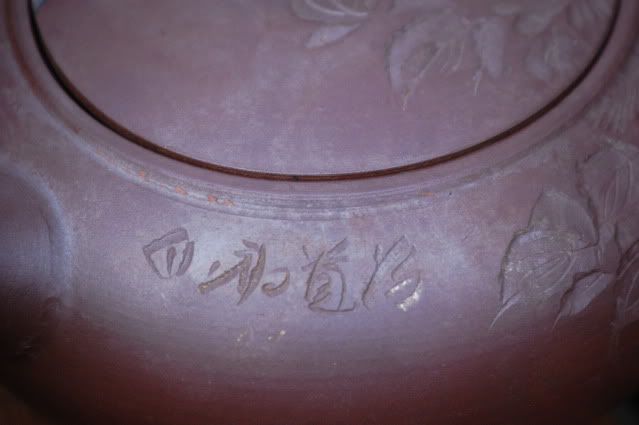
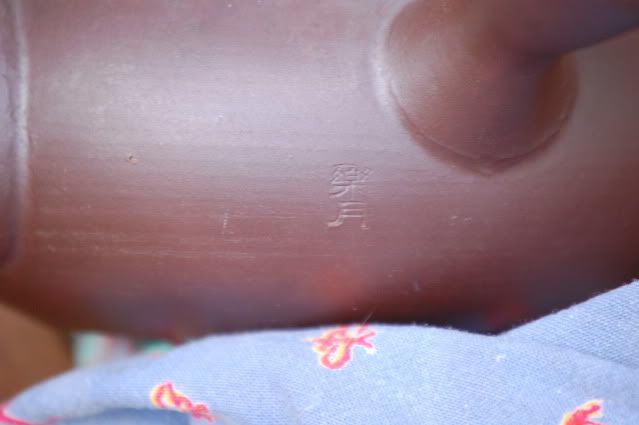
I am wondering how old this may be.
Sep 15th, '09, 16:42
Posts: 352
Joined: May 18th, '09, 09:49
by Robert Fornell » Sep 15th, '09, 16:42
Can any one read these?
Woozl,
The bottom photo reads raku getsu, fun/enjoyable moon. The top is a little harder as if it's a Japanese kyusu, it might be pre-war. Soon after the war the kanji system was revised....... sorry
Best,
R