Curiosity. Then looking for advise.
I have thoroughly enjoyed my time here even if I don't post much.
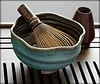
Pai Mu Tan in the mug today.
Mar 27th, '09, 19:28
Posts: 508
Joined: Apr 1st, '08, 12:43
Location: united states IL.
Contact:
silvermage2000
Mar 27th, '09, 19:42
Posts: 281
Joined: Mar 6th, '08, 18:02
Location: immersed in tea
Contact:
trent
In my cup today:
90's dan cong (started 4 days ago)
late 80's puerh (started last week)
yancha from The Tea Gallery (started earlier this week)
90's roasted oolong from houde (started 2 weeks ago)
young sheng from houde (started today)
Does anyone else brew their tea for this long, or am I crazy? I usually have 3-5 pots going, and only stop when the tea yields water.
90's dan cong (started 4 days ago)
late 80's puerh (started last week)
yancha from The Tea Gallery (started earlier this week)
90's roasted oolong from houde (started 2 weeks ago)
young sheng from houde (started today)
Does anyone else brew their tea for this long, or am I crazy? I usually have 3-5 pots going, and only stop when the tea yields water.

One has to wonder...
...why you feel that these tea leaves are impervious to slow oxidation and microbial growth. Unless you're oven drying them inbetween extraction steps, that is.
*grinning*
Or maybe it lends a certain tang to your extended brewing sessions...
(thanks for posting the link on Japanese arts and crafts culture)
*grinning*
Or maybe it lends a certain tang to your extended brewing sessions...
(thanks for posting the link on Japanese arts and crafts culture)
Mar 27th, '09, 21:26
Posts: 281
Joined: Mar 6th, '08, 18:02
Location: immersed in tea
Contact:
trent
Re: One has to wonder...
I think tim would be a better person to ask, considering I'm copying his method. Somehow, the tea gallery brewed some yancha for 7 weeks!Intuit wrote:...why you feel that these tea leaves are impervious to slow oxidation and microbial growth.
http://themandarinstea.blogspot.com/200 ... sting.html

Mar 27th, '09, 22:58
Posts: 20891
Joined: Apr 22nd, '06, 20:52
Scrolling: scrolling
Location: Back in the TeaCave atop Mt. Fuji
See, you learn something new everyday around here.  Although I may not be applying this practice to sencha brewing
  I will break out new leaf everyday!
I am enjoying genmai, mugi, buckwheat "roasted" in my hot air popcorn popper. Then brewed with some houji kukicha. Quite enjoyable!
Although I may not be applying this practice to sencha brewing I will break out new leaf everyday!I am enjoying genmai, mugi, buckwheat "roasted" in my hot air popcorn popper. Then brewed with some houji kukicha. Quite enjoyable!
blah blah blah SENCHA blah blah blah!!!


Mar 28th, '09, 00:48
Posts: 281
Joined: Mar 6th, '08, 18:02
Location: immersed in tea
Contact:
trent
Mar 28th, '09, 00:58
Posts: 20891
Joined: Apr 22nd, '06, 20:52
Scrolling: scrolling
Location: Back in the TeaCave atop Mt. Fuji

Mar 28th, '09, 01:20
Posts: 281
Joined: Mar 6th, '08, 18:02
Location: immersed in tea
Contact:
trent
To preface, it's adopted from this article by Matt http://mattchasblog.blogspot.com/2008/0 ... n-tea.html.Chip wrote:Ok, I'll bite, please share your Korean style for Chinese greens.trent wrote:I should add, greens are the only kind of tea I don't do this w/. Japanese greens, I brew 5 times. Chinese greens, I brew Korean style.
I've only been doing it for about a week, so it's more of an idea than a method. i.e. I still need to tweak it alot to get it right.
basic idea: start brewing at a really low temperature, gradually increase temperature untill you use boiling water and the leaves only yield water.
why I like it: as we know, gong fu brewing dissects tea layer by layer. Rather than brewing one infusion, we let the tea reveal itself over multiple short infusions. "Korean Style" brewing operates on that same premise w/ a twist (at least in my understanding of it). Different chemicals are released from the tea at different temperatures. By brewing at a cold temperature, then working our way up to a hot temperature, we extract the chemicals layer by layer. (i.e. the first infusion is composed of the chemicals that can be extracted at a low temperature. when those are exhausted, we up the temperature so we can extract that next chemical tier. Remember, the low temperature chemicals are exhausted, so we are predominately extracting the higher temperature chemicals.
*take what I wrote with a grain of salt - it's only a theory, and I've only done it about 6 times. However, what I can definitively say is that I don't really like chinese greens brewed the conventional way, but I like them when they're brewed like this.
If anyone wants any clarification or elucidation, feel free to ask.
**cough, cough, hint, hint, chip - we could have a teaday poll sometime to see if people like the Korean method**
Mar 28th, '09, 01:41
Posts: 20891
Joined: Apr 22nd, '06, 20:52
Scrolling: scrolling
Location: Back in the TeaCave atop Mt. Fuji