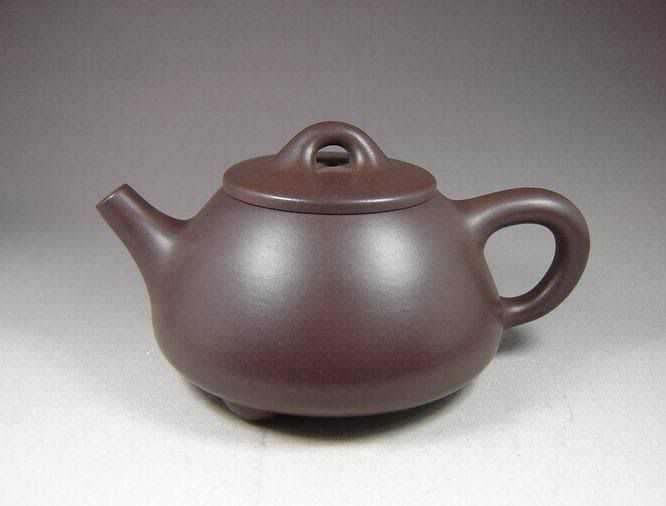
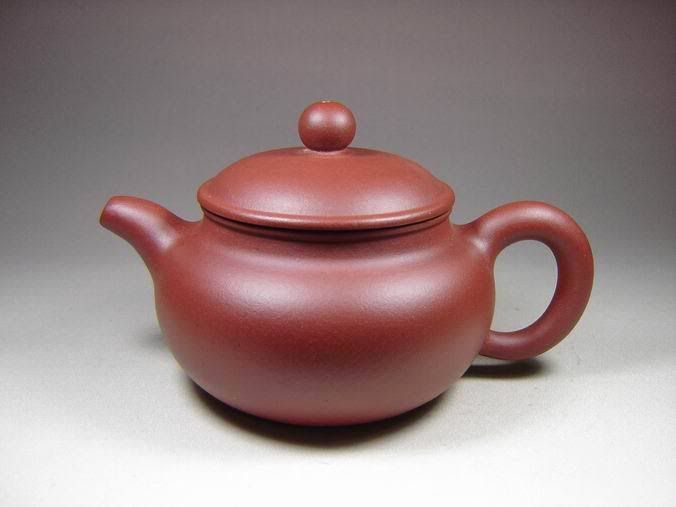
It's more of an art. If you pay attention everyone has a different story and it usually is more about selling pots than truth. My favorite pot for rolled green oolongs is a thin walled, 'fat and round', high density, ball filter, red clay. For baozhongs my favorite is a dense, thick walled, squat big bottomed one hole filter brown clay pot. However, those examples are _what I like_ to _my taste_. I select a pot for what it does to a particular tea, rules of thumb will only get you so far.
An incomplete list of characteristics and a vague, general, inaccurate idea of their supposed effect (getting the idea?).
- size - smaller is generally better, none of my pots are over 120ml, most around 90ml.
- shape - roughly match the shape of the leaves, the key is that the leaves need to have room to fully unfold. Baozhongs for instance require a fat bottom or larger pot as the leaves are quite long.
- porosity - has an effect on how much 'stuff' is absorbed, more porous pots change the flavor more. Different clays are supposed to have different porosity, but my experience is this is highly variable at the consumer lvl.
- density - is similar to porousness, but also effects temperature. can be tested by clicking the lid on the side of the pot and listening to the tone.
- thickness - effects how much heat gets retained over time.
- filter type - ball, flat, etc. match to the type of leaves, baozhong doesn't need much of a filter, but puerh usually does since the leaves are almost always broken up.
and yes, if the tea benifits from elevated temperatures during brewing you both pre-heat the pot and also pour hot water over it intermittently during brewing.